
Does an air dome stadium use a lot of electricity?
Release time:
2025-08-15
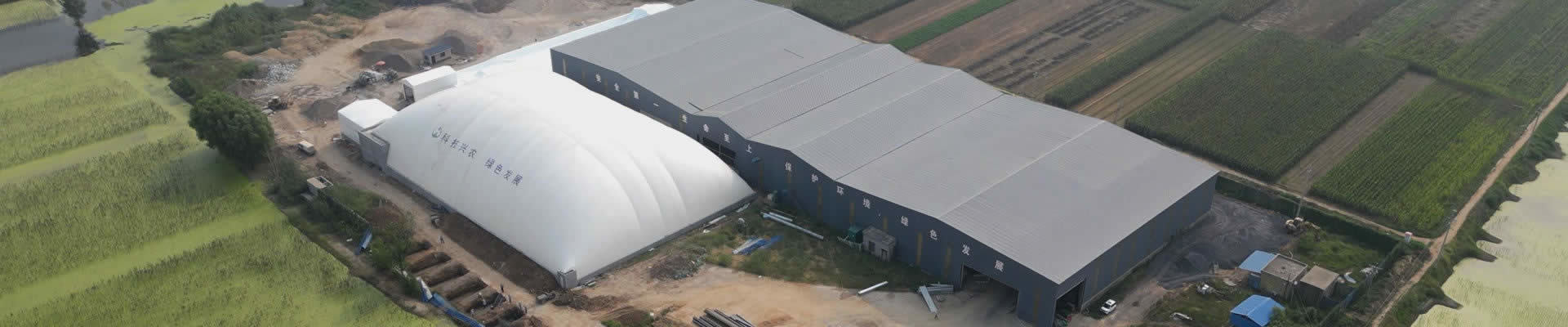
At a time when the national fitness and sports industry is booming, all kinds of stadiums are springing up. The air membrane stadium as a unique structure and many advantages, gradually into the public's field of vision. However, many people have doubts about its power consumption, after all, it is related to operating costs and sustainability.
So, the air membrane stadium power consumption? Xinyuan air membrane with you from three aspects of the analysis.

Fans
Air-film stadiums need to be equipped with fan equipment to maintain the internal air pressure balance, which is a major feature that distinguishes them from traditional buildings. The running status of the fans directly affects the power consumption. Take a common 2000 square metres air membrane stadium as an example, it is usually equipped with two fans with a power of 5.5KW. During normal operation, a single fan is not running at full capacity, but at 30% of the rated power. This calculation, a single fan working 24 hours a day energy consumption is about: 5.5KW × 30% × 24h = 40KW・h, two fans daily energy consumption of about 80KW・h, monthly (according to 30 days) fan energy consumption of about 2400KW・h. And, when the air pressure inside and outside the air film is stable in the set value, and the external environment does not have a substantial change in the fan or even a brief shutdown, the actual energy consumption will be even lower! The actual energy consumption is even lower. Compared with the continuous operation of the traditional ventilation equipment, the air film stadium fan energy consumption control is more advantageous.
Lighting System
Lighting energy consumption is also an important part of the stadium's electricity consumption. The top of the air membrane stadium is often equipped with good natural lighting performance after setting up the lighting belt with light-transmitting membrane material. During the day, the sunlight enters the stadium through the membrane material, forming uniform diffuse light, providing sufficient lighting for the stadium, basically no need to open artificial lighting equipment. Only at night or on cloudy days when the light is insufficient, the lighting system needs to be switched on. The same 2000 square metres of air membrane stadium, for example, if equipped with a total power of 10KW LED lighting, assuming that the lighting is fully open for 5 hours a day, the daily lighting energy consumption: 10KW × 5h = 50KW・h, monthly lighting energy consumption of about 1,500KW・h. And even if there are windows in the traditional gymnasium, due to structural and spatial layout and other factors, the effect of natural lighting is poor, the use of artificial lighting time is long, and energy consumption is much higher than the air membrane gymnasium. The energy consumption of traditional gymnasium is much higher than that of air film gymnasium.
Air-conditioning equipment
Air-conditioning energy consumption is affected by a variety of factors, such as floor area, indoor/outdoor temperature difference, and the thermal insulation performance of the membrane material. Air-film stadiums excel in heat preservation and insulation. On the one hand, the membrane material usually has high heat reflectivity and heat dissipation rate, and low thermal conductivity, which can effectively block the external heat transfer or internal heat loss; on the other hand, most of the air membrane gymnasium adopts a double-layer membrane structure, with a heat preservation layer in the middle of the outer membrane and the inner membrane, which further improves the heat preservation effect. According to the actual data for reference, the energy consumption per square metre of the air membrane stadium is about 0.21KW・h/h (this data will fluctuate due to the actual situation). If 2000 square metres of air membrane stadium, air conditioning energy consumption per hour is about 2000 × 0.21 = 420KW・h. However, in actual operation, through the intelligent control system, according to the indoor and outdoor temperatures, the number of people and other real-time adjustment of air-conditioning power and running time, reduce energy consumption.
From a comprehensive point of view, air-covered stadiums show excellent characteristics in controlling the energy consumption of fans, lighting, air-conditioning and other major power-using equipment. Although the specific power consumption may vary according to the actual situation such as the area of the stadium, the frequency of use, regional climate, etc., but overall, the air membrane stadium by virtue of high-efficiency materials, intelligent control technology, good natural lighting and reasonable modular equipment, to achieve a high energy efficiency, energy saving advantages are obvious, is not everyone's imagination, "the tiger of electricity! It is not a "tiger of electricity" as we all think. With the continuous progress of science and technology, the energy-saving performance of the air membrane stadium is expected to further enhance the development of sports undertakings to provide a more environmentally friendly, sustainable venues to choose.
Keywords:
Latest News
PRODUCTS
CONTACT US

TEl :

WHATSAPP:
+8613717559290

E-MAIL :

ADDRESS :
No. 137, 1st Floor, Block B, No. 23 Chaoqian Road, Science and Technology Park, Changping District, Beijing


Online Message